
Best Native Plants for Northern Virginia, DC, and Maryland
Native trees, shrubs, and perennials that handle our clay, heat, and deer, sorted by the spot you need to fill, from dry shade to soggy corners.
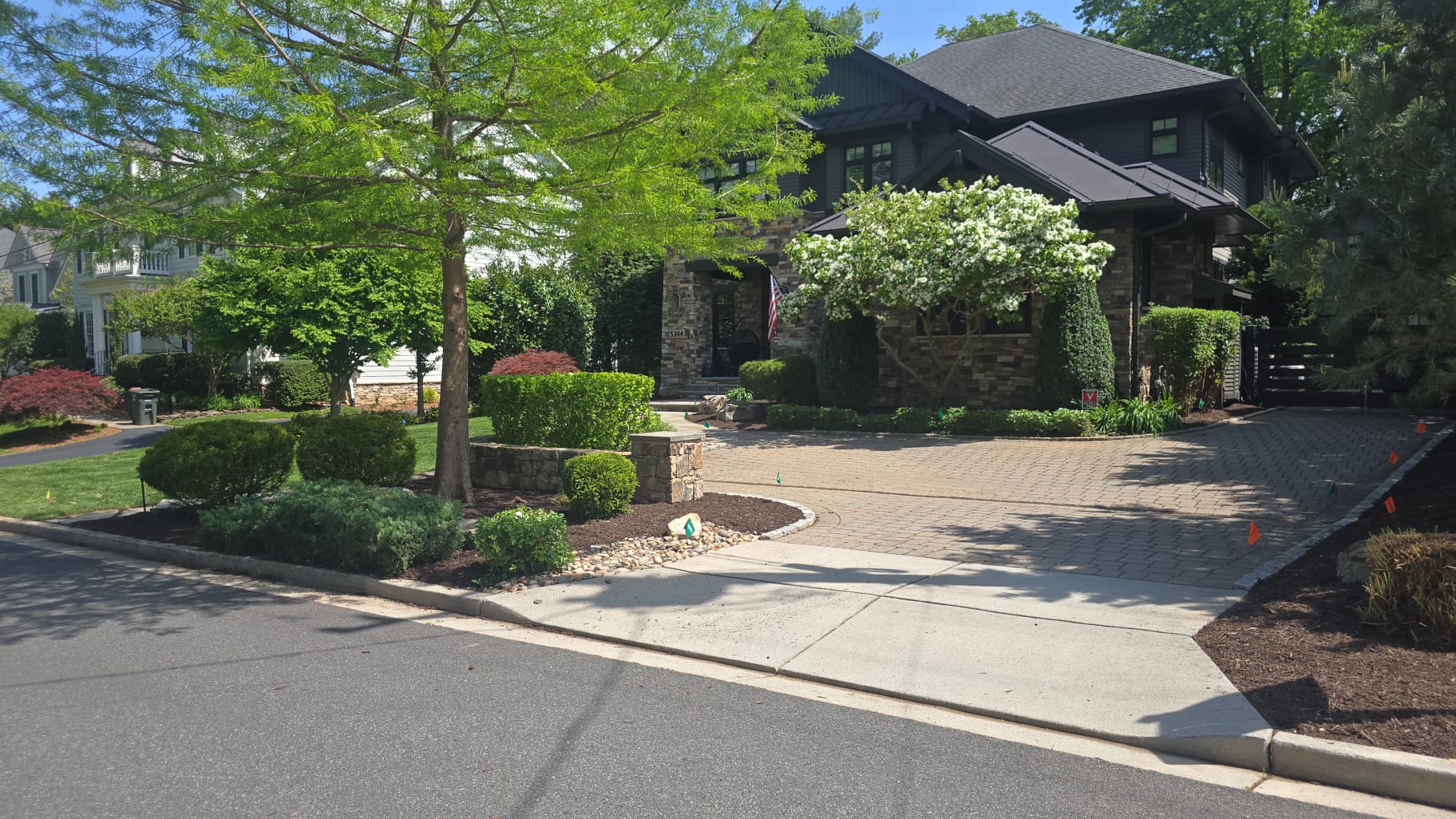
Native plants grew up with the same clay soil, humid summers, and freeze and thaw winters that your yard deals with. Once they are established, they need less water and fertilizer than most imported ornamentals, they feed the birds and pollinators that depend on them, and they help keep runoff out of the Potomac, the Anacostia, and the Chesapeake Bay.
The trick is choosing the right plant for the right spot. Below are dependable natives for yards in Northern Virginia, Washington, DC, and suburban Maryland, sorted by the kind of space you need to fill. To filter by sun, moisture, plant type, and deer pressure, try our free native plant finder and save a list as you go.
Small trees for townhomes and tight lots
- Eastern redbud (Cercis canadensis). Pink flowers on bare branches in early spring, then heart shaped leaves. 20 to 30 feet tall.
- Serviceberry (Amelanchier canadensis). White spring flowers, June berries that birds love, and orange fall color. 15 to 25 feet.
- Flowering dogwood (Cornus florida). Virginia's state tree. Happiest with morning sun and afternoon shade. 15 to 30 feet.
- Sweetbay magnolia (Magnolia virginiana). Lemon scented white flowers in early summer, and it tolerates wet soil. 10 to 35 feet.
Any of these fits a front yard or a small backyard without shading out the whole lot.
Evergreen screens and boxwood alternatives
Boxwood blight has damaged many hedges in the region. These natives keep their leaves all year:
- American holly (Ilex opaca). A tall evergreen screen with red berries on female trees. Grows in sun or shade.
- Inkberry holly (Ilex glabra). The closest native stand-in for boxwood. Compact varieties make tidy low hedges.
- Mountain laurel (Kalmia latifolia). Showy late spring flowers. Needs acidic, well drained soil and some shade.
Dry shade under big trees
Grass struggles under mature oaks and maples, where roots soak up the water and the canopy blocks the sun. These plants are made for it:
- Pennsylvania sedge (Carex pensylvanica). A soft, low lawn alternative, 6 to 10 inches tall.
- Christmas fern (Polystichum acrostichoides). Stays green all winter and holds slopes in place.
- Wild columbine (Aquilegia canadensis). Red and yellow nodding flowers in spring that bring in early hummingbirds.
In shade with average moisture, add woodland phlox (Phlox divaricata), foamflower (Tiarella cordifolia), and wild ginger (Asarum canadense), which knits into a solid groundcover.
Wet spots and rain gardens
If water sits in a low corner after storms, plant something that likes it. These are rain garden favorites:
- Buttonbush (Cephalanthus occidentalis). Round white pincushion flowers. Handles standing water.
- Virginia sweetspire (Itea virginica). Fragrant white flower spikes and long lasting red fall color.
- Summersweet (Clethra alnifolia). Sweet scented blooms in July and August, even in shade.
- Swamp milkweed (Asclepias incarnata). Pink flowers and a host plant for monarch butterflies.
- Blue flag iris (Iris versicolor) and cardinal flower (Lobelia cardinalis) for color at the wet edge.
- River birch (Betula nigra). A shade tree with peeling cinnamon bark that handles clay and wet ground better than most.
If the soggy spot is more than a planting problem, read our guide to yard drainage solutions for clay soil.
Hot, dry, sunny strips
South facing beds, curb strips, and the edges of driveways bake in July. These natives thrive there:
- Little bluestem (Schizachyrium scoparium). Blue summer blades that turn copper in fall. Likes poor soil.
- Butterfly weed (Asclepias tuberosa). Bright orange milkweed, another monarch host.
- Threadleaf coreopsis (Coreopsis verticillata). Months of yellow flowers on fine foliage.
- Black-eyed Susan (Rudbeckia fulgida). Maryland's state flower. Blooms for weeks with almost no care.
- Moss phlox (Phlox subulata). A spring carpet of color for walls and bed edges.
- Northern bayberry (Morella pensylvanica). An aromatic shrub that tolerates road salt along streets and driveways.
Plants deer usually leave alone
Deer pressure is heavy in much of Fairfax County and Montgomery County, especially near parks and stream valleys. These natives are rarely browsed:
- Shrubs and trees: American holly, inkberry holly, winterberry, arrowwood viburnum, summersweet, mountain laurel, sweetbay magnolia, and river birch
- Perennials: black-eyed Susan, purple coneflower, butterfly weed, wild bergamot, and mountain mint
- Grasses and ferns: switchgrass, little bluestem, Pennsylvania sedge, and Christmas fern
Deer resistant is not deer proof. Hungry deer in late winter will try almost anything, so protect new plantings during their first year. Redbud, dogwood, serviceberry, and Virginia sweetspire are all worth growing, but expect to protect them where deer are common.
Pollinators, monarchs, and hummingbirds
- Monarch host plants: butterfly weed and swamp milkweed
- Bee magnets: mountain mint, wild bergamot, and purple coneflower
- Late season fuel: New England aster and wrinkleleaf goldenrod. Goldenrod does not cause hay fever; ragweed, which blooms at the same time, does.
- Hummingbirds: cardinal flower, wild columbine, and coral honeysuckle (Lonicera sempervirens), a well behaved vine unlike invasive Japanese honeysuckle
Oaks deserve a special mention. White oak (Quercus alba), Maryland's state tree, supports more caterpillar species than almost any other plant in the region, and those caterpillars feed nesting songbirds.
Fall color and winter interest
- Black gum (Nyssa sylvatica) and red maple (Acer rubrum) for some of the best scarlet fall color of any shade trees
- Red chokeberry (Aronia arbutifolia) and Virginia sweetspire for red fall foliage on shrubs
- Winterberry (Ilex verticillata) for bright red berries all winter. Plant a male nearby so the females fruit.
- Little bluestem and switchgrass for copper and tan structure through the snow
Swap these invasive plants for natives
Several plants that were common in local landscapes are now listed as invasive in Virginia and Maryland because they spread into parks and woods. Here are easy swaps:
| Instead of | Try |
|---|---|
| Japanese barberry | Inkberry holly or Virginia sweetspire |
| Burning bush | Virginia sweetspire or red chokeberry |
| Callery pear, including Bradford pear | Serviceberry or eastern redbud |
| English ivy as a groundcover | Pennsylvania sedge, Christmas fern, or golden ragwort |
| Japanese honeysuckle | Coral honeysuckle |
How to plant natives in clay soil
- Plant in fall or spring. Fall, from late September into November, is ideal because roots keep growing in the warm soil while the tops rest.
- Dig wide, not deep. Make the hole two to three times wider than the root ball, but no deeper.
- Set the plant slightly high. In clay, the top of the root ball should sit a little above the surrounding soil so water drains away from the crown.
- Do not fill the hole with rich potting mix. In clay, a pocket of soft soil collects water like a bathtub. Backfill mostly with the native soil you dug out.
- Mulch 2 to 3 inches deep, and keep it a few inches away from stems and trunks. Our materials calculator tells you how much mulch to order for any bed.
- Water deeply once a week through the first growing season, especially in July and August.
For a designed look, plant in groups of three, five, or seven of the same plant, and keep a crisp bed edge or a path nearby. Leave stems standing through winter for overwintering insects and birds, then cut back in late winter.
Ready to plant?
Build a list with the native plant finder and send it to us. We will confirm what suits your site and give you a free estimate. We design and install native plantings across Arlington, Alexandria, Fairfax, McLean, Lorton, Bethesda, Takoma Park, and Washington, DC. Learn more about landscape design and planting and installation.
Frequently asked questions
Do native plant gardens look messy?
They do not have to. What reads as tidy is design: clear bed edges, mulch between young plants, plants in groups instead of one of everything, and a strip of lawn or a path that shows the space is cared for.
Do native plants need fertilizer?
Usually not. Most natives grow best in ordinary soil, and extra fertilizer tends to make them floppy. A soil test from your local Cooperative Extension office is the best guide.
When is the best time to plant?
Fall is best, and spring is a close second. Avoid planting in the heat of July and August unless you can water faithfully.
Can native plants replace part of my lawn?
Yes. Converting hard to mow slopes, shady corners, and soggy low spots to native plantings cuts mowing, watering, and runoff. Local programs such as RiverSmart Homes in DC, RainScapes in Montgomery County, and StormwaterWise Landscapes in Arlington have offered incentives for conservation landscaping. Availability changes, so check the current rules for your address.